Digital Marketing vs Traditional Marketing: Key Differences, Benefits, and Examples
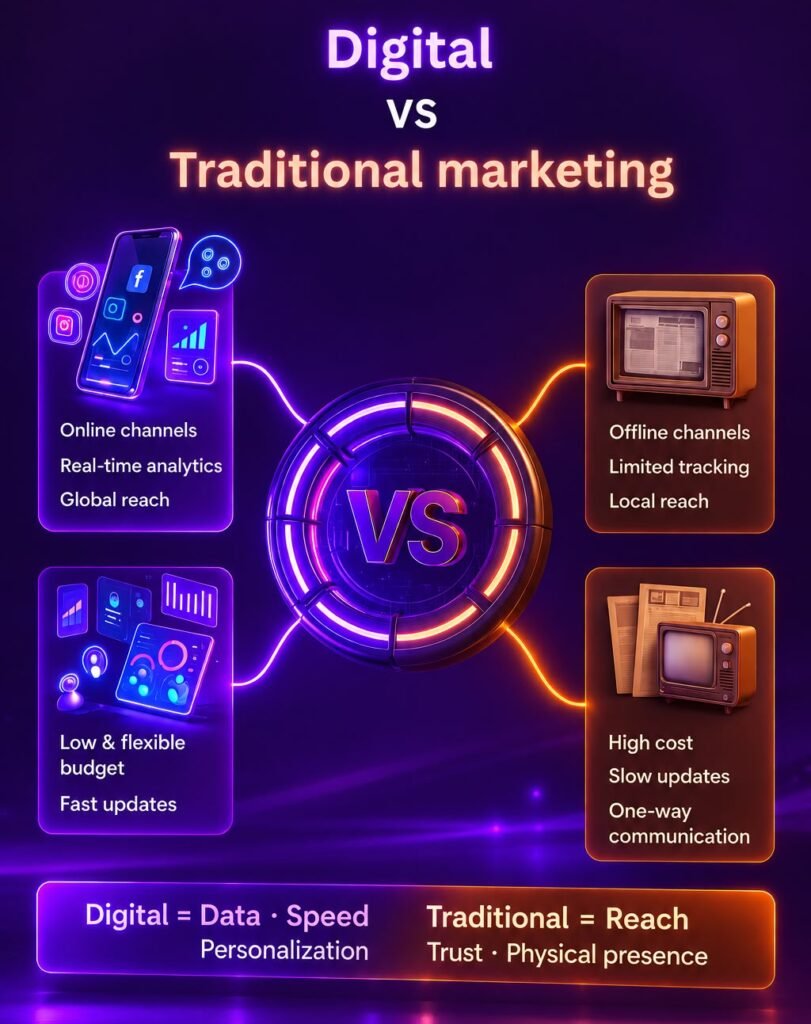
Introduction Marketing plays an important role in helping businesses attract customers, promote products, and build brand awareness. As technology continues to develop, businesses have more ways than ever to reach their target audience. Two major approaches are digital marketing and traditional marketing. Traditional marketing uses offline channels such as newspapers, television, radio, billboards, and printed advertisements. Digital marketing uses online channels such as search engines, social media, websites, email, and digital advertising platforms. Both approaches can help businesses grow, but they differ in cost, targeting, audience reach, measurement, and customer interaction. In this blog, we will explore digital marketing vs traditional marketing, understand their key differences, compare their advantages and disadvantages, and discover how businesses can choose the right marketing strategy. What Is Digital Marketing? Digital marketing is the promotion of products, services, or brands through digital channels and technologies. It allows businesses to connect with potential customers online and measure how people interact with their marketing campaigns. Popular types of digital marketing include: Example of Digital Marketing A local restaurant can promote its menu through Instagram Reels, run Facebook and Instagram advertisements targeting nearby customers, and use Google Business Profile to help people discover its location. These activities can increase online visibility and encourage customers to visit the restaurant or place an order. What Is Traditional Marketing? Traditional marketing refers to promotional activities carried out through offline media and established advertising channels. It has been used for decades to reach local communities, regional audiences, and large groups of consumers. Common types of traditional marketing include: Example of Traditional Marketing A clothing store can distribute flyers around its neighbourhood, display banners outside the shop, and advertise a seasonal sale in a local newspaper. These methods can help the business attract people who live nearby and may prefer offline information. Digital Marketing vs Traditional Marketing: Key Differences The main difference is the channel used to reach customers. However, each approach also differs in how audiences are targeted, how performance is measured, and how customers interact with a business. Factor Digital Marketing Traditional Marketing Marketing channels Websites, search engines, social media, email TV, radio, newspapers, billboards Audience targeting Often allows detailed audience and behaviour-based targeting Commonly targets audiences by location, publication, programme, or broad demographics Cost Can start with relatively small budgets Some channels require substantial production and placement costs Measurement Offers metrics such as clicks, conversions, and engagement Often relies on estimates, surveys, unique codes, or tracked responses Interaction Can support comments, messages, clicks, and online purchases Often one-way, although customers can respond through calls, visits, or other methods Optimization Campaigns can often be adjusted quickly Printed or broadcast campaigns may be harder to change after release Reach Can reach local or global audiences through online channels Can reach local, regional, or national audiences depending on the medium Personalization Can tailor messages to different audience segments Often uses broader messages for a particular audience Speed Campaigns can sometimes launch quickly Production and placement may require more preparation Best suited for Online engagement, measurable campaigns, lead generation, e-commerce Physical visibility, broad exposure, local awareness, offline audiences Actual results depend on the campaign, audience, industry, budget, and execution. Neither approach guarantees success. Advantages of Digital Marketing Digital marketing offers several benefits for businesses that want to reach customers online. 1. Precise Audience Targeting Many digital advertising platforms allow businesses to define audiences using relevant criteria such as location, interests, or previous interactions, subject to platform policies and available settings. For example, a fitness centre can promote its membership offers to people in its service area instead of advertising to an unnecessarily broad audience. 2. Flexible Budget Options Businesses can often start with a small advertising budget and adjust spending based on campaign performance. Organic channels such as SEO and social media content can also help businesses build visibility without paying for every individual view, although they still require time and resources. 3. Measurable Results Digital platforms provide data that helps marketers understand campaign performance. Common metrics include: These metrics help marketers identify opportunities for improvement. 4. Direct Customer Engagement Customers can comment on posts, send messages, ask questions, and share their experiences online. This interaction helps businesses understand customer needs and build stronger relationships. 5. Wider Market Reach A business can use digital channels to reach people in a local area or expand into other regions and countries, depending on its products, services, and delivery capabilities. Disadvantages of Digital Marketing Despite its advantages, digital marketing also has some challenges. A clear strategy, accurate measurement, and consistent customer service can help businesses manage these challenges. Advantages of Traditional Marketing Traditional marketing remains useful for many businesses, especially when offline visibility and broad public exposure are important. 1. Strong Local Visibility Billboards, shop signage, posters, and flyers can help businesses attract attention in specific physical locations. For example, a new supermarket can display banners near nearby residential areas to promote its opening. 2. Reaches Offline Audiences Not every potential customer regularly uses social media or searches online for products. Radio, print media, and outdoor advertisements can help reach people through other channels. 3. Physical Brand Presence Printed brochures, product catalogues, and direct mail give customers something tangible to read or keep. This can be useful for businesses that rely on in-person sales, events, or local relationships. 4. Broad Exposure Television, radio, and large outdoor campaigns can expose a brand to many people within a region or market. Their effectiveness depends on the audience, placement, timing, and quality of the message. Disadvantages of Traditional Marketing Traditional marketing also has limitations that businesses should consider. These disadvantages vary by channel. For example, a small batch of local flyers may be inexpensive, while a national television campaign can be costly. Digital Marketing vs Traditional Marketing: Which Is More Cost-Effective? Cost-effectiveness depends on the business objective, target audience, industry, and campaign execution. Digital marketing may be more suitable when a business wants to test different messages, generate trackable leads, reach specific audiences, or measure online conversions. Traditional marketing […]