Author name: admin

Uncategorized

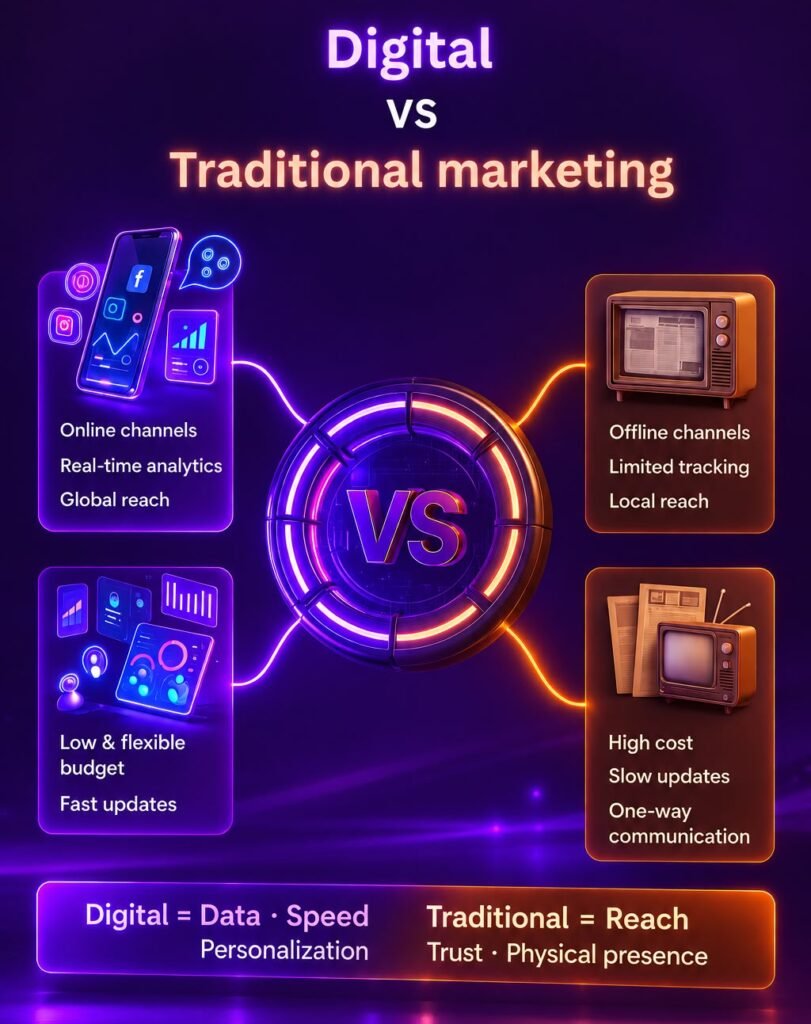
Digital Marketing vs Traditional Marketing: Key Differences, Benefits, and Examples

Introduction Marketing plays an important role in helping businesses attract customers, promote products, and build brand awareness. As technology continues to develop, businesses have more ways than ever to reach their target audience. Two major approaches are digital marketing and traditional marketing. Traditional marketing uses offline channels such as newspapers, television, radio, billboards, and printed advertisements. Digital marketing uses online channels such as search engines, social media, websites, email, and digital advertising platforms. Both approaches can help businesses grow, but they differ in cost, targeting, audience reach, measurement, and customer interaction. In this blog, we will explore digital marketing vs traditional marketing, understand their key differences, compare their advantages and disadvantages, and discover how businesses can choose the right marketing strategy. What Is Digital Marketing? Digital marketing is the promotion of products, services, or brands through digital channels and technologies. It allows businesses to connect with potential customers online and measure how people interact with their marketing campaigns. Popular types of digital marketing include: Example of Digital Marketing A local restaurant can promote its menu through Instagram Reels, run Facebook and Instagram advertisements targeting nearby customers, and use Google Business Profile to help people discover its location. These activities can increase online visibility and encourage customers to visit the restaurant or place an order. What Is Traditional Marketing? Traditional marketing refers to promotional activities carried out through offline media and established advertising channels. It has been used for decades to reach local communities, regional audiences, and large groups of consumers. Common types of traditional marketing include: Example of Traditional Marketing A clothing store can distribute flyers around its neighbourhood, display banners outside the shop, and advertise a seasonal sale in a local newspaper. These methods can help the business attract people who live nearby and may prefer offline information. Digital Marketing vs Traditional Marketing: Key Differences The main difference is the channel used to reach customers. However, each approach also differs in how audiences are targeted, how performance is measured, and how customers interact with a business. Factor Digital Marketing Traditional Marketing Marketing channels Websites, search engines, social media, email TV, radio, newspapers, billboards Audience targeting Often allows detailed audience and behaviour-based targeting Commonly targets audiences by location, publication, programme, or broad demographics Cost Can start with relatively small budgets Some channels require substantial production and placement costs Measurement Offers metrics such as clicks, conversions, and engagement Often relies on estimates, surveys, unique codes, or tracked responses Interaction Can support comments, messages, clicks, and online purchases Often one-way, although customers can respond through calls, visits, or other methods Optimization Campaigns can often be adjusted quickly Printed or broadcast campaigns may be harder to change after release Reach Can reach local or global audiences through online channels Can reach local, regional, or national audiences depending on the medium Personalization Can tailor messages to different audience segments Often uses broader messages for a particular audience Speed Campaigns can sometimes launch quickly Production and placement may require more preparation Best suited for Online engagement, measurable campaigns, lead generation, e-commerce Physical visibility, broad exposure, local awareness, offline audiences Actual results depend on the campaign, audience, industry, budget, and execution. Neither approach guarantees success. Advantages of Digital Marketing Digital marketing offers several benefits for businesses that want to reach customers online. 1. Precise Audience Targeting Many digital advertising platforms allow businesses to define audiences using relevant criteria such as location, interests, or previous interactions, subject to platform policies and available settings. For example, a fitness centre can promote its membership offers to people in its service area instead of advertising to an unnecessarily broad audience. 2. Flexible Budget Options Businesses can often start with a small advertising budget and adjust spending based on campaign performance. Organic channels such as SEO and social media content can also help businesses build visibility without paying for every individual view, although they still require time and resources. 3. Measurable Results Digital platforms provide data that helps marketers understand campaign performance. Common metrics include: These metrics help marketers identify opportunities for improvement. 4. Direct Customer Engagement Customers can comment on posts, send messages, ask questions, and share their experiences online. This interaction helps businesses understand customer needs and build stronger relationships. 5. Wider Market Reach A business can use digital channels to reach people in a local area or expand into other regions and countries, depending on its products, services, and delivery capabilities. Disadvantages of Digital Marketing Despite its advantages, digital marketing also has some challenges. A clear strategy, accurate measurement, and consistent customer service can help businesses manage these challenges. Advantages of Traditional Marketing Traditional marketing remains useful for many businesses, especially when offline visibility and broad public exposure are important. 1. Strong Local Visibility Billboards, shop signage, posters, and flyers can help businesses attract attention in specific physical locations. For example, a new supermarket can display banners near nearby residential areas to promote its opening. 2. Reaches Offline Audiences Not every potential customer regularly uses social media or searches online for products. Radio, print media, and outdoor advertisements can help reach people through other channels. 3. Physical Brand Presence Printed brochures, product catalogues, and direct mail give customers something tangible to read or keep. This can be useful for businesses that rely on in-person sales, events, or local relationships. 4. Broad Exposure Television, radio, and large outdoor campaigns can expose a brand to many people within a region or market. Their effectiveness depends on the audience, placement, timing, and quality of the message. Disadvantages of Traditional Marketing Traditional marketing also has limitations that businesses should consider. These disadvantages vary by channel. For example, a small batch of local flyers may be inexpensive, while a national television campaign can be costly. Digital Marketing vs Traditional Marketing: Which Is More Cost-Effective? Cost-effectiveness depends on the business objective, target audience, industry, and campaign execution. Digital marketing may be more suitable when a business wants to test different messages, generate trackable leads, reach specific audiences, or measure online conversions. Traditional marketing […]

Uncategorized

Best AI Tools for Digital Marketers

Introduction Best AI Marketing Tools help businesses save time, create engaging content, improve SEO, and manage marketing campaigns more efficiently. From AI-powered writing assistants to graphic design and analytics tools, these solutions simplify digital marketing tasks. In this blog, we will explore the best AI marketing tools and how they can help businesses improve productivity, reach target audiences, and grow online.Artificial Intelligence (AI) is transforming the way businesses promote their products and services online. From creating social media posts to improving SEO, analyzing customer behaviour, and managing advertising campaigns, AI tools help digital marketers work more efficiently. Today, marketers no longer need to spend hours brainstorming content ideas, designing creatives, or analyzing large amounts of data manually. With the right AI tools, they can save time, improve productivity, and create more personalized marketing experiences. Whether you are a beginner, freelancer, business owner, or professional digital marketer, understanding the best AI tools can help you stay competitive in the digital world. In this blog, we will explore the best AI tools for digital marketers, their features, benefits, and how to choose the right tools for your marketing goals.AI Tools for Digital Marketing help businesses save time, improve productivity, and create effective marketing campaigns. From content creation and graphic design to SEO optimization and social media management, these AI-powered tools simplify everyday marketing tasks. In this blog, we will explore the best AI tools for digital marketing and how they help businesses improve their marketing strategies, reach target audiences, and achieve better results. What Are AI Tools in Digital Marketing? AI tools in digital marketing are software applications that use artificial intelligence to assist with marketing activities. They can generate content, analyze data, identify trends, automate repetitive tasks, and support decision-making. These tools can be useful for: AI does not replace the need for marketing strategy or human creativity. Instead, it helps marketers complete tasks faster and make better-informed decisions. Benefits of the Best AI Marketing Tools The best AI marketing tools help businesses save time, improve productivity, and create effective marketing campaigns. These tools support content writing, graphic design, SEO optimization, and social media management. By choosing the best AI marketing tools, marketers can simplify repetitive tasks and focus on business growth. 1. ChatGPT – Best for Content Creation ChatGPT is an AI assistant that helps digital marketers brainstorm ideas, write content drafts, develop campaign concepts, and create marketing messages. Key features: Why marketers use it: ChatGPT can help overcome writer’s block and generate multiple content ideas quickly. Marketers can refine its responses to match their brand voice and target audience. Example: A digital marketer can use ChatGPT to generate Instagram captions for a restaurant promotion or outline a blog about SEO strategies. Website: https://chatgpt.com/ 2. Canva AI – Best for Graphic Design Canva is a popular design platform with AI-powered features that help users create visual content for digital marketing. Key features: Why marketers use it: Canva helps marketers create attractive visual content without requiring advanced graphic design skills. It is especially useful for creating Instagram posts, advertisements, banners, and promotional creatives. Example: A small business can create an Instagram poster to promote a new product or special offer. Website: https://www.canva.com/ 3. Google Gemini – Best for Research and Brainstorming Google Gemini can assist with research, idea generation, information organization, and content planning. Key features: Why marketers use it: Gemini can help marketers explore different approaches to a campaign and organize information before creating content. Important facts, statistics, and claims should always be checked against reliable sources. Website: https://gemini.google.com/ 4. Grammarly – Best for Writing and Editing Grammarly helps marketers improve the clarity, correctness, and tone of written content. Key features: Why marketers use it: Clear, professional writing helps businesses communicate more effectively with their audiences. Grammarly can help polish blog posts, emails, advertisements, and website content before publication. Example: A marketer can review an email campaign to make the message clearer and easier to understand. Website: https://www.grammarly.com/ 5. Semrush – Best for SEO and Keyword Research Semrush offers digital marketing tools for SEO, competitor research, keyword discovery, and website performance analysis. Key features: Why marketers use it: SEO helps businesses attract people who are actively searching for their products, services, or information. Semrush can help marketers discover relevant search terms and identify opportunities to improve website visibility. Example: A digital marketing agency can research keywords related to social media marketing services and use them to plan blog content. Website: https://www.semrush.com/ Best Uses of AI Tools for Digital Marketing AI Tools for Digital Marketing can be used for creating blog posts, designing social media creatives, researching keywords, and analyzing campaign performance. These tools help marketers understand audience interests and develop more effective marketing campaigns 6. Jasper – Best for Marketing Copywriting Jasper is an AI-powered content platform designed to support marketing teams with content and campaign creation. Key features: Why marketers use it: Jasper can help teams develop consistent marketing messages across different channels. Its suitability depends on the team’s content volume, workflow, and budget. Website: https://www.jasper.ai/ 7. HubSpot AI – Best for Marketing Automation and CRM HubSpot combines customer relationship management (CRM) capabilities with marketing, sales, and customer service tools. Its AI features can support content creation and parts of the marketing workflow. Key features: Why marketers use it: HubSpot can help businesses organize customer information and coordinate marketing activities. It is particularly useful for teams that want to connect lead generation with follow-up and customer engagement. Website: https://www.hubspot.com/ 8. Buffer – Best for Social Media Management Buffer helps businesses plan, schedule, and manage social media content. AI-assisted features can also help users develop and refine post ideas. Key features: Why marketers use it: Maintaining a consistent posting schedule can be challenging. Buffer helps marketers organize content in advance and manage multiple social channels more efficiently. Example: A small business can prepare a week’s worth of posts and schedule them ahead of time. Website: https://buffer.com/ Popular AI Tools for Digital Marketing AI Tools for Digital Marketing help marketers […]

Uncategorized

Common Meta Ads Mistakes and How to Avoid Them

Introduction Meta Ads have become an important part of digital marketing for businesses that want to reach potential customers, generate leads, increase website traffic, and improve sales. Through platforms such as Facebook and Instagram, businesses can promote their products and services to relevant audiences. However, running advertisements does not automatically guarantee success. Many businesses spend money on Meta Ads but struggle to achieve their desired results because of poor targeting, weak ad creatives, incorrect campaign settings, or ineffective optimization. The good news is that most of these problems can be identified and improved with the right strategy. In this blog, we will explore the most common Meta Ads mistakes, explain why they happen, and share practical ways to avoid them so you can improve campaign performance and use your advertising budget more effectively. Common Meta Ads Mistakes to Avoid Common Meta Ads mistakes can affect campaign performance and waste your advertising budget. Businesses should avoid poor audience targeting, low-quality ad creatives, incorrect campaign objectives, and unclear calls to action. Identifying these common Meta Ads mistakes helps advertisers create more effective campaigns. How to Fix Common Meta Ads Mistakes To avoid common Meta Ads mistakes, choose the right campaign objective, understand your target audience, and create attractive ad creatives. Test different headlines, images, and ad copy to discover what works best. Monitor campaign results regularly and use performance data to improve your Meta Ads strategy. Tips to Improve Meta Ads Performance Avoiding common Meta Ads mistakes requires continuous testing and optimization. Track important metrics such as cost per lead, click-through rate, and conversions. By correcting common Meta Ads mistakes and making data-driven decisions, businesses can improve advertising efficiency and generate better results. What Are Meta Ads? Meta Ads are paid advertisements that businesses can run across Facebook, Instagram, and other eligible placements within Meta’s advertising ecosystem. Businesses use Meta Ads to achieve goals such as: To achieve these goals, marketers need to choose the right campaign setup, create relevant advertisements, understand their audience, and measure performance regularly. Let’s look at the mistakes that can prevent campaigns from delivering the expected results. 1. Not Defining a Clear Campaign Goal One of the most common Meta Ads mistakes is launching a campaign without a clear objective. Some businesses want more sales, while others want enquiries, website visits, or brand awareness. When the campaign objective does not match the actual business goal, the advertising may generate activity without delivering meaningful results. How to avoid it: Before launching a campaign, decide what success means for your business. Select the objective and optimization settings that align with the result you actually want. Remember that clicks and engagement do not necessarily translate into sales. 2. Targeting the Wrong Audience Even an attractive advertisement can perform poorly when it reaches people who are unlikely to be interested in the offer. Targeting too broadly without a clear strategy or narrowing the audience excessively can both create challenges. The right approach depends on your product, location, budget, and available conversion data. How to avoid it: For example, a local restaurant should consider its delivery area when advertising food offers. A digital marketing agency may target businesses within its service area or promote services to a relevant wider audience. The goal is to reach potential customers who are more likely to take meaningful action. 3. Using Weak or Unattractive Ad Creatives Your ad creative plays a major role in capturing attention. If your image, video, or message does not stand out or communicate the offer clearly, people may scroll past without engaging. Common creative mistakes include cluttered designs, unreadable text, poor-quality images, unclear benefits, and weak headlines. How to avoid it: Create advertisements that are visually clear and easy to understand. For example, a restaurant advertisement could feature an appealing food image, a clear offer, the restaurant name, and a direct call to action. Your creative should quickly explain why the offer matters to the customer. 4. Writing Poor Ad Copy An attractive image alone may not be enough to convince people to take action. If the ad copy is confusing, too long, overly generic, or focused only on the business, potential customers may not understand the value of the offer. How to avoid it: Use a simple structure for your ad copy: For example: Looking to grow your business online? Our digital marketing services help businesses improve their online visibility through social media marketing, SEO, and creative content. Contact us to discuss your marketing goals. Keep your claims realistic, relevant, and easy to understand. 5. Choosing the Wrong Campaign Objective Selecting an objective based on the cheapest result can be a costly mistake. For instance, a traffic campaign is designed around website visits, while a lead-generation campaign is designed to support lead-related actions. If your real goal is to collect qualified enquiries, optimizing only for inexpensive clicks may not produce the results you need. How to avoid it: Match your campaign setup to your intended customer action. If you want purchases, use an appropriate sales-focused setup. If you want enquiries, consider lead forms, website forms, messaging, or calls where supported. Also, ensure that your tracking and optimization events are configured correctly. Choose campaigns based on meaningful business outcomes rather than vanity metrics. 6. Ignoring Mobile-Friendly Ad Design Many people browse Facebook and Instagram on mobile devices. If your advertisement uses small text, poorly cropped images, or a confusing layout, the message may be difficult to understand on a phone. How to avoid it: A mobile-friendly experience makes it easier for potential customers to understand your offer and complete the next step. 7. Using the Same Ad Creative for Too Long When people repeatedly see the same advertisement, they may become less responsive. This can contribute to creative fatigue, particularly when the audience is limited or the campaign runs for a long period. How to avoid it: Refresh your creative strategy when the data suggests performance is declining. Try variations such as: Do not replace advertisements simply because they have […]

Uncategorized

The Importance of Graphic Design in Digital Marketing

Introduction In today’s digital world, businesses need more than just a good product or service to stand out from the competition. They also need to communicate their message clearly, attract attention, and create a strong impression on potential customers. This is where graphic design plays an important role in digital marketing. Graphic design combines colours, typography, images, layouts, and visual elements to communicate ideas effectively. From social media posts and website banners to digital advertisements and promotional videos, design helps businesses present their brand professionally and connect with their target audience. A well-designed visual can capture attention, communicate a message quickly, and encourage people to take action. In this blog, we will explore the importance of graphic design in digital marketing, its benefits, and how businesses can use effective design to improve their online presence. Why Graphic Design in Digital Marketing Is Important Graphic design in digital marketing helps businesses communicate their message through attractive visuals. Effective graphic design in digital marketing can improve brand recognition, attract potential customers, and make marketing campaigns more engaging. Benefits of Graphic Design in Digital Marketing One of the main benefits of graphic design in digital marketing is improved brand awareness. Creative social media posts, banners, advertisements, and infographics help businesses capture audience attention. Using consistent graphic design in digital marketing also creates a professional brand image and builds customer trust. How Graphic Design Supports Digital Marketing Graphic design in digital marketing makes complex information easier to understand. Eye-catching visuals can improve social media engagement, support advertising campaigns, and encourage customers to learn more about a product or service. What Is Graphic Design in Digital Marketing? Graphic design in digital marketing is the process of creating visual content to promote a brand, product, or service through digital channels. It helps businesses communicate marketing messages through attractive and easy-to-understand visuals. Common examples of graphic design in digital marketing include: The main purpose of graphic design is not just to make content look attractive. It is to communicate information, support brand recognition, and guide the audience toward a marketing goal. 1. Creates a Strong First Impression First impressions matter in digital marketing. When potential customers discover a business online, its visual presentation can influence how they perceive the brand. Professional graphic design helps a business appear organized, trustworthy, and consistent. Poorly designed visuals, on the other hand, may make the brand look confusing or unprofessional. For example, a business with a well-designed website, clear service graphics, and consistent social media posts can create a stronger first impression than a business with unrelated colours, unclear text, and inconsistent layouts. Tip: Use high-quality visuals, readable typography, balanced layouts, and consistent brand colours to create a positive impression. 2. Builds Brand Identity and Recognition Brand identity helps customers recognize and remember a business. Graphic design plays a key role in developing that identity. Elements such as logos, colours, typography, icons, and image styles help create a recognizable visual language. When these elements are used consistently across websites, social media platforms, advertisements, and email campaigns, customers can become more familiar with the brand. For example, using the same colour palette and typography across Instagram posts, website banners, and digital advertisements can make a business look more unified. A strong visual identity helps a business stand out and maintain a consistent presence across different digital platforms. 3. Captures Audience Attention People often scroll quickly through social media feeds and websites. Attractive and relevant visuals can help a brand stand out and encourage users to pause and explore its message. Effective designs use a clear headline, a relevant image, strong visual contrast, and a simple layout to direct attention toward the most important information. For example, a restaurant promoting a new food item might use an appetizing product photograph, a bold headline, and a clear offer to attract attention. However, an attractive design should also be relevant to the audience and the message. Adding too many colours, fonts, or decorative elements can make the content difficult to understand. 4. Improves Social Media Marketing Social media platforms are highly visual, making graphic design an important part of an effective content strategy. Businesses use visual content to introduce products, share information, announce offers, promote services, and engage with followers. Useful social media design formats include: Well-designed social media creatives can help communicate a message quickly and maintain a consistent brand appearance. To improve performance, adapt your design to the platform, audience, and content format. Test different creative styles and measure results rather than assuming that a visually attractive post will automatically generate engagement. 5. Increases the Effectiveness of Digital Advertising Graphic design is an important part of paid advertising campaigns on platforms such as Meta Ads and Google Ads. An advertisement needs to communicate its offer clearly, attract the right audience, and encourage the viewer to take the next step. Effective advertising creatives often include: For example, a digital marketing agency can create an advertisement that highlights its social media marketing services, explains a relevant benefit, and encourages business owners to enquire. Good design can support advertising performance, but results also depend on audience targeting, the offer, campaign settings, landing-page quality, and follow-up. 6. Improves Website User Experience Graphic design is not limited to promotional posters and social media content. It also plays an important role in website design and user experience. A well-designed website helps visitors understand information, navigate pages, and find what they need. Important website design elements include: For example, a service website should make it easy for visitors to understand the services offered, explore relevant information, and contact the business. A clean and user-friendly design reduces confusion and helps visitors move through the website more comfortably. 7. Makes Complex Information Easier to Understand Some marketing messages involve detailed information, statistics, instructions, or comparisons. Presenting everything as plain text may make it difficult for readers to understand. Graphic design can simplify complex information through visual formats such as infographics, diagrams, charts, and illustrations. For example, a digital marketing agency could […]

Uncategorized

Why Every Business Needs a Professional Website

Introduction In today’s digital world, having an online presence is essential for business growth. Customers often search online before choosing a product, service, or company. If your business does not have a professional website, you may miss opportunities to reach potential customers and build trust. A professional website is more than just an online page. It represents your brand, showcases your products and services, provides important information, and helps customers connect with your business. Whether you run a small business, a startup, a restaurant, or a digital marketing agency, a well-designed website can support your marketing efforts and help you compete in the digital marketplace. In this blog, we will explore why every business needs a professional website, its major benefits, and how it can contribute to long-term business growth. What Is a Professional Website? A professional website is an online platform designed to represent a business clearly, reliably, and effectively. It provides visitors with information about the company, its products or services, and how to contact or purchase from it. A good business website typically includes: The goal is to create a positive user experience and make it easy for visitors to take the next step. 1. Builds Trust and Credibility Trust plays an important role in purchasing decisions. Before contacting a business, many customers want to understand what it offers and whether it appears reliable. A professional website helps establish credibility by presenting your brand, services, business information, and customer reviews in an organized way. For example, a digital marketing agency can use its website to showcase previous projects, explain its services, display genuine client testimonials, and provide clear contact information. A business that presents information professionally can make it easier for potential customers to evaluate its offering. Why it matters: A website gives customers a central place to learn about your business before making a decision. 2. Makes Your Business Available 24/7 Unlike a physical store or office, a website can provide information to visitors at any time of day. Customers can explore your services, read frequently asked questions, view product information, or submit an enquiry even when your business is closed. For example, a restaurant can display its menu, location, opening hours, and ordering options. A service provider can explain its packages and allow customers to request a consultation. A website does not guarantee an immediate response, but it helps customers access important information whenever they need it. 3. Helps Customers Find Your Business on Google Search engines are an important way for people to discover businesses, products, and services. A website gives your business a platform to appear in relevant search results. With effective Search Engine Optimization (SEO), you can improve your website’s ability to attract relevant organic traffic. Important SEO practices include: For example, a local bakery with useful pages about its products, location, and services may have more opportunities to appear in relevant local searches. SEO takes time, and rankings are not guaranteed. However, a well-optimized website can become a valuable long-term source of potential customers. 4. Generates Quality Leads and Enquiries A professional website can help turn visitors into potential customers through clear calls to action and simple enquiry options. Businesses can use website features such as: For example, a digital marketing agency can create a landing page explaining its Meta Ads services and include a form for businesses interested in lead generation. A well-designed page should communicate the value of the service and make the next step easy. Tip: Keep forms simple, ask only for necessary information, and explain how submitted personal data will be used. 5. Supports Your Digital Marketing Campaigns A website works as a central destination for your digital marketing activities. You can direct visitors from social media, search engines, email campaigns, and paid advertisements to relevant website pages. For example, a Meta Ads campaign promoting a service can send potential customers to a dedicated landing page with more details, customer benefits, and an enquiry form. A website also allows businesses to organize their content and measure important actions, such as form submissions and purchases, when tracking is configured correctly. This helps marketers understand which campaigns contribute to meaningful business outcomes. 6. Showcases Your Products and Services A website allows you to present your products and services in detail without relying entirely on social media profiles or printed brochures. You can include: For example, a graphic designer can showcase branding projects, social media creatives, and poster designs. A restaurant can publish its menu and highlight popular dishes. Clear product and service pages help visitors understand what you offer and whether it meets their needs. 7. Gives You Greater Control Over Your Brand Social media platforms are useful for connecting with customers, but businesses have limited control over their layout, features, and platform policies. A website provides more control over how your business is presented online. You can choose your brand colours, typography, layout, content, navigation, and customer journey. You can also organize information in a way that supports your business goals. A consistent brand experience across your website, social media accounts, advertisements, and other marketing channels can help customers recognize your business more easily. Social media and websites work best when they support each other rather than compete for attention. 8. Helps You Compete With Other Businesses Customers can compare businesses quickly online. A website gives you an opportunity to explain what makes your business different and why customers should consider your products or services. You can communicate your unique selling proposition (USP), highlight your strengths, explain your process, and answer common customer questions. For small businesses, a professional website can help present services clearly even when competing with larger brands. Your website does not need to be complicated or expensive to be useful. It needs to communicate your value, work reliably, and make it easy for customers to take action. 9. Improves Customer Experience A well-designed website helps visitors find information quickly and complete tasks without confusion. Good website user experience includes: If visitors struggle to […]

Uncategorized

Email Marketing Strategies to Build Customer Relationships

Introduction In today’s competitive digital world, building strong customer relationships is essential for long-term business success. Attracting new customers is important, but keeping existing customers engaged and encouraging them to return can be equally valuable. This is where email marketing plays an important role. Email marketing allows businesses to communicate directly with their audience, share useful information, introduce new products, and provide personalized offers. Unlike many social media platforms, email gives businesses a direct communication channel with people who have chosen to receive their messages. However, successful email marketing is not just about sending promotional emails. It is about understanding customer needs, delivering value, building trust, and maintaining consistent communication. In this blog, we will explore effective email marketing strategies that help businesses build meaningful customer relationships, improve engagement, and encourage long-term loyalty. What Is Email Marketing? Email marketing is a digital marketing strategy that involves sending emails to subscribers and customers to share information, promote products or services, provide updates, and maintain relationships. Businesses use email marketing for several purposes, including: When used strategically, email marketing helps businesses stay connected with their audiences throughout the customer journey. 1. Understand Your Audience The first step in building strong customer relationships through email marketing is understanding your audience. Every customer has different needs, interests, and purchasing behaviours. Before creating an email campaign, identify what your subscribers want to learn, what problems they face, and how your business can help them. You can understand your audience through customer feedback, purchase history, website behaviour, surveys, and voluntary subscription preferences. For example, an online clothing store may send product recommendations based on a subscriber’s stated preferences, while a digital marketing agency may share SEO tips and advertising strategies with business owners. When your emails address real customer needs, subscribers are more likely to find them useful and relevant. 2. Build a Quality Email List A successful email marketing strategy begins with a relevant and permission-based subscriber list. Instead of collecting as many email addresses as possible, focus on attracting people who genuinely want to hear from your business. You can build your email list through: Clearly explain what subscribers can expect when they join your list. For example, tell them whether you will send marketing tips, product updates, exclusive offers, or a monthly newsletter. Avoid purchasing email lists or adding people without appropriate permission. These practices can damage trust, increase spam complaints, and harm email deliverability. 3. Personalize Your Emails Personalization helps make email communication more relevant to individual subscribers. Instead of sending the same generic message to everyone, use appropriate information to tailor the content. Simple personalization strategies include: For example, a fitness business could send beginner workout tips to new subscribers and advanced training resources to people who have requested more advanced content. Personalization should be useful and respectful. Always handle customer data responsibly and avoid using information in ways subscribers would not reasonably expect. 4. Segment Your Email List Email segmentation means dividing your subscriber list into smaller groups based on shared characteristics or behaviours. Segmentation allows businesses to send more relevant messages instead of delivering the same campaign to every subscriber. Common ways to segment an email list include: For example, an online store could send product-care tips to recent buyers, while sending a welcome offer to eligible new subscribers. The more relevant your email content is to each group, the better the opportunity to build meaningful relationships. 5. Send a Welcome Email Series The welcome email is often one of the first direct interactions a subscriber has with your business. It is an opportunity to introduce your brand, set expectations, and begin building trust. An effective welcome email should include: You can also create a short welcome series. Email 1: Welcome the subscriber and explain what your business offers. Email 2: Share helpful information, resources, or practical tips. Email 3: Introduce relevant products or services, if appropriate. Keep the messages helpful rather than overly promotional. Use automation where available, and make sure subscribers can unsubscribe easily. 6. Provide Valuable and Relevant Content Customers are more likely to maintain a relationship with a business when its emails offer something useful. Instead of sending only sales announcements, create a balanced content strategy that educates, informs, and occasionally promotes. Useful email content can include: For example, a digital marketing agency could send a monthly newsletter featuring SEO tips, social media trends, and advice for improving advertising performance. When subscribers consistently receive valuable content, they have more reasons to stay connected with your brand. 7. Maintain Consistent Email Communication Consistency helps customers remember your business and understand when to expect updates. However, sending too many emails can overwhelm subscribers and lead to unsubscribes. Choose a schedule that matches your audience’s interests and your ability to produce quality content. Depending on your business, this might include a weekly newsletter, a monthly update, or occasional product announcements. To maintain consistency: The goal is to stay connected without making your emails feel intrusive. 8. Write Engaging Subject Lines The subject line is one of the first things subscribers see in their inbox. A clear, relevant subject line helps readers understand why an email may be worth opening. Effective subject lines are usually concise, specific, and connected to the email’s content. Examples include: Avoid misleading claims, excessive punctuation, and false urgency. Your subject line should accurately represent the email’s contents. You can test different subject lines to learn which styles work best for your audience. 9. Use Automation to Strengthen Customer Relationships Email automation allows businesses to send relevant messages based on specific actions, preferences, or stages in the customer journey. When implemented carefully, automation helps maintain communication without requiring every email to be sent manually. Useful email automation workflows include: Welcome emails: Sent when someone subscribes. Post-purchase emails: Provide order information, product guidance, or useful next steps. Abandoned-cart reminders: Remind eligible shoppers about products left in their cart. Re-engagement emails: Reach out to inactive subscribers with relevant content or a preference update. Feedback requests: Invite […]

Uncategorized

Best AI Tools for Digital Marketers

Introduction Artificial Intelligence (AI) is transforming the way businesses promote their products and services online. From creating social media posts to improving SEO, analyzing customer behaviour, and managing advertising campaigns, AI tools help digital marketers work more efficiently. Today, marketers no longer need to spend hours brainstorming content ideas, designing creatives, or analyzing large amounts of data manually. With the right AI tools, they can save time, improve productivity, and create more personalized marketing experiences. Whether you are a beginner, freelancer, business owner, or professional digital marketer, understanding the best AI tools can help you stay competitive in the digital world. In this blog, we will explore the best AI tools for digital marketers, their features, benefits, and how to choose the right tools for your marketing goals. The best AI tools for digital marketers can help simplify daily tasks, create engaging content, improve SEO, and analyze campaign performance. From content writing to social media management, AI tools help marketers work more efficiently and make data-informed decisions. In this guide, we explore useful AI tools for digital marketers and explain how they can support your marketing goals. What Are AI Tools in Digital Marketing? AI tools in digital marketing are software applications that use artificial intelligence to assist with marketing activities. They can generate content, analyze data, identify trends, automate repetitive tasks, and support decision-making. These tools can be useful for: AI does not replace the need for marketing strategy or human creativity. Instead, it helps marketers complete tasks faster and make better-informed decisions. 1. ChatGPT – Best for Content Creation ChatGPT is an AI assistant that helps digital marketers brainstorm ideas, write content drafts, develop campaign concepts, and create marketing messages. Key features: Why marketers use it: ChatGPT can help overcome writer’s block and generate multiple content ideas quickly. Marketers can refine its responses to match their brand voice and target audience. Example: A digital marketer can use ChatGPT to generate Instagram captions for a restaurant promotion or outline a blog about SEO strategies. Website: https://chatgpt.com/ 2. Canva AI – Best for Graphic Design Canva is a popular design platform with AI-powered features that help users create visual content for digital marketing. Key features: Why marketers use it: Canva helps marketers create attractive visual content without requiring advanced graphic design skills. It is especially useful for creating Instagram posts, advertisements, banners, and promotional creatives. Example: A small business can create an Instagram poster to promote a new product or special offer. Website: https://www.canva.com/ 3. Google Gemini – Best for Research and Brainstorming Google Gemini can assist with research, idea generation, information organization, and content planning. Key features: Why marketers use it: Gemini can help marketers explore different approaches to a campaign and organize information before creating content. Important facts, statistics, and claims should always be checked against reliable sources. Website: https://gemini.google.com/ 4. Grammarly – Best for Writing and Editing Grammarly helps marketers improve the clarity, correctness, and tone of written content. Key features: Why marketers use it: Clear, professional writing helps businesses communicate more effectively with their audiences. Grammarly can help polish blog posts, emails, advertisements, and website content before publication. Example: A marketer can review an email campaign to make the message clearer and easier to understand. Website: https://www.grammarly.com/ 5. Semrush – Best for SEO and Keyword Research Semrush offers digital marketing tools for SEO, competitor research, keyword discovery, and website performance analysis. Key features: Why marketers use it: SEO helps businesses attract people who are actively searching for their products, services, or information. Semrush can help marketers discover relevant search terms and identify opportunities to improve website visibility. Example: A digital marketing agency can research keywords related to social media marketing services and use them to plan blog content. Website: https://www.semrush.com/ 6. Jasper – Best for Marketing Copywriting Jasper is an AI-powered content platform designed to support marketing teams with content and campaign creation. Key features: Why marketers use it: Jasper can help teams develop consistent marketing messages across different channels. Its suitability depends on the team’s content volume, workflow, and budget. Website: https://www.jasper.ai/ 7. HubSpot AI – Best for Marketing Automation and CRM HubSpot combines customer relationship management (CRM) capabilities with marketing, sales, and customer service tools. Its AI features can support content creation and parts of the marketing workflow. Key features: Why marketers use it: HubSpot can help businesses organize customer information and coordinate marketing activities. It is particularly useful for teams that want to connect lead generation with follow-up and customer engagement. Website: https://www.hubspot.com/ 8. Buffer – Best for Social Media Management Buffer helps businesses plan, schedule, and manage social media content. AI-assisted features can also help users develop and refine post ideas. Key features: Why marketers use it: Maintaining a consistent posting schedule can be challenging. Buffer helps marketers organize content in advance and manage multiple social channels more efficiently. Example: A small business can prepare a week’s worth of posts and schedule them ahead of time. Website: https://buffer.com/ 9. Adobe Express – Best for Visual Content Creation Adobe Express provides design tools and AI-assisted features for creating graphics, promotional materials, and short-form videos. Key features: Why marketers use it: Adobe Express helps marketers create branded visuals for online campaigns. It can be useful for businesses that need professional-looking designs without building every creative from scratch. Website: https://www.adobe.com/express/ 10. Google Analytics 4 – Best for Marketing Analytics Google Analytics 4 (GA4) helps marketers understand how visitors interact with their websites and apps. Key features: Why marketers use it: Successful marketing requires more than publishing content and running advertisements. Marketers need to understand which channels bring visitors, which pages generate engagement, and which activities lead to conversions. GA4 helps businesses measure these outcomes and make more informed marketing decisions. Website: https://analytics.google.com/ Comparison of the Best AI Tools for Digital Marketers Tool Primary purpose Best suited for ChatGPT Content and idea generation Bloggers and marketers Canva AI Graphic design Social media creators Google Gemini Research and brainstorming Content planners Grammarly Writing improvement Content writers […]

Uncategorized

How to Create Content That Attracts Customers

Introduction In today’s digital world, content plays an important role in helping businesses connect with potential customers. Whether you run a small business, an online store, or a digital marketing agency, creating valuable content can help you increase brand awareness, build trust, and generate more leads.Creating content that attracts customers is essential for building brand awareness and growing your business online. The right content helps you connect with your target audience, answer their questions, build trust, and encourage them to take action. In this guide, we will explore practical ways to create engaging content that attracts customers. However, simply posting pictures, videos, or blog articles is not enough. Your content needs to capture attention, provide value, and encourage people to take action. The key is to understand your audience and create content that addresses their needs, interests, and problems. In this blog, we will explore practical strategies for creating content that attracts customers and supports business growth. 1. Understand Your Target Audience Before creating content, you need to know who you want to reach. Understanding your audience helps you develop messages that are relevant, useful, and engaging. Consider these questions: For example, a restaurant’s audience may enjoy food videos, menu highlights, customer reviews, and special offers. A digital marketing agency may attract business owners through SEO tips, advertising strategies, and marketing case studies. Tip: Create content that answers your audience’s questions instead of focusing only on promoting your products or services. 2. Create Valuable and Helpful Content People are more likely to pay attention to content that offers something useful. Your content should educate, entertain, inspire, or help your audience solve a problem. Some effective content ideas include: For example, instead of simply advertising a digital marketing service, you could publish a post explaining five ways to improve a business’s social media presence. When your content consistently provides value, people have more reasons to follow your brand and return for future information. 3. Use Attention-Grabbing Headlines Your headline is often the first thing people notice. A clear, interesting headline can encourage them to stop scrolling and explore your content. Try using headlines that highlight a benefit, answer a question, or address a common problem. Examples include: Avoid misleading clickbait. Your headline should accurately reflect the information provided in your content. Tip: Focus on the value your audience will receive rather than using attention-grabbing words without substance. 4. Choose the Right Content Format Different audiences respond to different types of content. Choosing the right format helps you communicate your message more effectively. Popular content formats include: Short-form videos: Ideal for quick tips, product demonstrations, and behind-the-scenes content. Images and posters: Useful for promotions, announcements, offers, and visually communicating key messages. Blog articles: Suitable for detailed explanations, educational content, and attracting organic search traffic. Carousels: Helpful for step-by-step guides, lists, and breaking down complex topics into smaller sections. Stories and live videos: Useful for sharing updates, answering questions, and interacting directly with your audience. Experiment with different formats and review your results to understand what works best for your business. 5. Tell Stories That Connect With People Storytelling helps make your content more relatable and memorable. Instead of only listing product features, explain how your product or service fits into a customer’s life. You can share stories about how your business started, how your team solves customer problems, or how customers use your products. For example, a local business could share the story behind its most popular product, show how it is prepared, and explain what makes the experience special. Authentic storytelling can help customers understand your brand’s personality and values. Remember to use genuine stories and obtain permission before sharing identifiable customer information or testimonials. 6. Create Content That Builds Trust Customers are more likely to consider a business when they understand what it offers and believe its claims. Build trust by sharing content that demonstrates your knowledge, quality, and reliability. Effective approaches include: Avoid exaggerated promises or misleading claims. Trust is built through consistency and honest communication over time. 7. Use Strong Calls to Action (CTAs) A call to action tells your audience what to do next. Without a clear CTA, people may enjoy your content but not take the next step. Your CTA should match the purpose of your content. Examples include: For example, a service-based business could end an educational post with: “Need help improving your online presence? Contact us to discuss your goals.” Use one clear primary CTA whenever possible, so the audience understands the next step. 8. Optimize Your Content for SEO Search engine optimization can help people discover your content when they search for relevant topics online. If you publish blog posts or website content, use SEO practices to improve visibility. Start by: For example, a blog about content marketing could naturally target the phrase “how to create content that attracts customers.” Avoid keyword stuffing. Your content should remain clear, natural, and useful to readers. 9. Maintain a Consistent Content Calendar Consistency helps your business stay active and maintain a connection with its audience. A content calendar allows you to plan topics, formats, and publishing dates in advance. A simple weekly content calendar might include: This is only an example. Choose a schedule that fits your resources and audience. Planning ahead also helps you maintain a balance between educational, entertaining, community-focused, and promotional content. 10. Measure Content Performance Creating content is only part of the process. You also need to understand whether it is helping your business achieve its goals. Track performance using the analytics tools available on your website and social media platforms. Useful metrics include: For example, if your goal is to generate leads, measure how many qualified inquiries your content produces rather than focusing only on likes. Review the results regularly. Identify which topics and formats perform well, learn from weaker posts, and improve your future content. 11. Repurpose Your Content to Reach More People You do not always need to create something completely new. Repurposing allows you to turn one […]

Uncategorized

Social Media Strategies That Actually Work

Introduction Social media has become one of the most powerful tools for businesses to connect with customers, build brand awareness, and increase sales. Platforms such as Instagram, Facebook, LinkedIn, and TikTok give businesses opportunities to reach their target audience and promote their products or services. However, simply posting content every day does not guarantee success. To achieve meaningful results, businesses need a clear strategy, engaging content, consistent communication, and regular performance analysis. Whether you run a small business, manage a brand, or work in digital marketing, the right social media strategies can help you build a stronger online presence. In this blog, we will explore practical social media strategies that actually work and how you can use them to grow your business. To learn more about digital marketing, explore our Digital Marketing Services page to discover strategies that can help improve your online visibility and reach more customers. 1. Understand Your Target Audience The first step to successful social media marketing is understanding your audience. You need to know who your potential customers are, what they are interested in, and what problems they want to solve. Consider factors such as age group, location, interests, online behaviour, and purchasing needs. For example, a restaurant may attract local customers through food videos, special offers, and customer reviews. A digital marketing agency may focus on business owners who want to generate leads and improve their online visibility. Tip: Create content based on your audience’s needs rather than posting only what your business wants to promote. 2. Set Clear and Measurable Goals Every social media strategy should begin with a clear goal. Without specific objectives, it becomes difficult to determine whether your efforts are successful. Common social media marketing goals include: Make your goals measurable. Instead of saying, “I want more engagement,” aim to improve meaningful engagement over a defined period. Choose metrics that match your objectives. For example, track qualified inquiries and sales if your main goal is business growth, rather than focusing only on likes. 3. Create Valuable and Engaging Content Content is the foundation of an effective social media strategy. People are more likely to interact with content that educates, entertains, inspires, or helps them solve a problem. You can create different types of content, including: For example, a clothing brand could share styling tips, new arrivals, and customer photos instead of publishing promotional posts every day. A balanced content strategy keeps your audience interested while helping your business communicate its value. 4. Use Short-Form Videos to Capture Attention Short-form videos on Instagram Reels, Facebook Reels, and TikTok can help businesses present their products and ideas in an engaging format. Videos can demonstrate how a product works, answer frequently asked questions, showcase customer experiences, or share useful information quickly. To create effective short-form videos: For example, a restaurant can create a short video showing the preparation of a popular dish, while a digital marketing agency can share quick tips about improving social media engagement. Focus on useful, original content instead of following every trend without considering your audience. 5. Maintain a Consistent Posting Schedule Consistency helps your business maintain visibility and build an ongoing relationship with its audience. However, consistency does not mean publishing content constantly. Create a realistic content calendar that fits your resources and audience preferences. A simple weekly schedule could look like this: This is only a sample schedule. Choose a posting frequency you can maintain without sacrificing quality. Review your analytics to understand which days, times, and content formats work best for your audience. 6. Write Captions That Encourage Interaction An effective caption does more than describe an image. It gives people a reason to stop, read, respond, or take action. A useful caption structure includes a hook, a relevant message, and a call to action. For example: “Struggling to get noticed on social media? 📱 Your business needs more than random posts. Create valuable content, understand your audience, and use a strategy that supports your goals. What’s your biggest social media marketing challenge? Share it in the comments!” Keep your captions easy to understand and relevant to the content. Ask genuine questions, invite useful feedback, and avoid engagement bait that offers little value. 7. Use Hashtags and Keywords Strategically Hashtags and keywords can help users understand what your content is about and may support discovery on relevant platforms. Instead of adding dozens of unrelated hashtags, use a focused selection that accurately describes your topic, business, or location. For example, a local digital marketing agency might use relevant terms such as #DigitalMarketing, #SocialMediaMarketing, and #ContentStrategy. Also include important phrases naturally in your captions, profile description, video text, and other relevant fields. Remember that hashtags alone cannot guarantee reach. Content quality, audience relevance, and platform-specific recommendation systems also influence visibility. 8. Engage With Your Audience Social media is a two-way communication channel. Posting content is only one part of building a strong online presence. Responding to comments, answering messages, and participating in relevant conversations can help create stronger customer relationships. Effective engagement practices include: When people feel heard and supported, they have more opportunities to develop trust in your brand. 9. Collaborate With Creators and Other Businesses Collaborations can introduce your business to audiences that may not know your brand yet. Depending on your goals, you could work with relevant content creators, industry experts, complementary businesses, or existing customers. For example, a restaurant could collaborate with a local food creator, while a fitness brand could work with a trainer who shares similar audience interests. Before collaborating, consider audience relevance, content quality, credibility, engagement, and cost. Choose partnerships that fit your brand values and offer genuine value to the audience. Clearly disclose paid partnerships when required. 10. Use Paid Social Media Advertising Strategically Organic content helps you build a community, while paid advertising can help you reach specific audiences and pursue measurable business goals. Platforms such as Meta Ads Manager offer campaign options for objectives including awareness, engagement, leads, and sales. To run more effective campaigns: For example, […]

Uncategorized

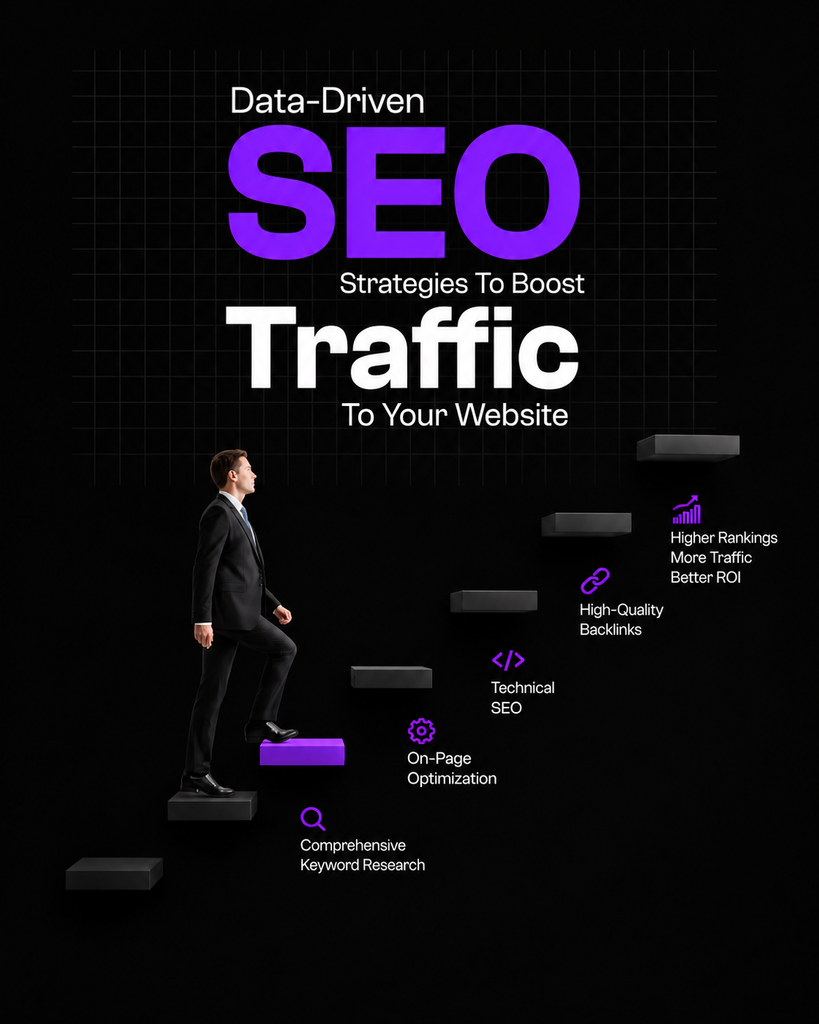
Simple SEO Strategies to Boost Your Website Traffic

Introduction In today’s digital world, having a website is not enough to grow your business online. Your website needs to reach the right audience and appear in search results when people look for products, services, or information related to your business. This is where Search Engine Optimization (SEO) becomes important.Simple SEO strategies can help businesses improve their search engine rankings, attract organic traffic, and build a strong online presence. By optimizing website content, using relevant keywords, and improving user experience, you can boost your website traffic and reach your target audience. SEO is the process of improving your website to help search engines understand your content and make it easier for people to discover your pages through organic search results. The good news is that you do not need to be an SEO expert to get started. By following a few simple and effective SEO strategies, you can improve your website’s visibility, attract relevant visitors, and build a stronger online presence. In this blog, we will explore practical SEO strategies that can help boost your website traffic. 1. Find the Right Keywords Keyword research is one of the most important steps in SEO. Keywords are the words and phrases people type into search engines when looking for information, products, or services. Choosing relevant keywords helps you understand what your target audience is searching for and create content that meets their needs. How to find the right keywords: For example, instead of targeting only “digital marketing,” a local agency might create content around “digital marketing services in Malappuram.” Specific keywords can help you reach people with clearer search intent. 2. Create High-Quality, Helpful Content Content plays a major role in attracting organic website traffic. Search engines aim to provide users with useful, relevant answers to their questions. Create content that solves problems, answers common questions, and provides genuine value to your audience. You can publish: For example, a digital marketing agency could publish blogs about SEO basics, social media marketing, Google Ads, and lead generation. Keep your content clear, accurate, original, and easy to read. Avoid creating articles solely to repeat keywords or reach a particular word count. Tip: Write for people first and optimize your content for search engines naturally. 3. Optimize Your Page Titles and Meta Descriptions Page titles and meta descriptions help communicate what a webpage is about in search results. A good title should describe the page clearly and include the main keyword where appropriate. A useful meta description summarizes the page and gives users a reason to visit. Example: SEO Title: Simple SEO Strategies to Boost Website Traffic Meta Description: Discover simple SEO strategies to improve search visibility, optimize your website, create helpful content, and attract more organic traffic. Make every page title unique and relevant. Keep descriptions informative and avoid misleading promises. Search engines may sometimes generate a different title or snippet based on the search query. 4. Improve Your Website Loading Speed Website speed affects user experience. Visitors may become frustrated if pages take too long to load, especially on mobile devices. A faster, more responsive website makes it easier for users to explore your content and complete important actions. Simple ways to improve website speed: Also pay attention to Google’s Core Web Vitals, which measure aspects of loading performance, responsiveness, and visual stability. A technically sound website gives visitors a smoother experience and supports your overall SEO efforts. 5. Make Your Website Mobile-Friendly Many people browse the internet using smartphones. If your website is difficult to navigate on a small screen, visitors may leave without exploring your content. A mobile-friendly website should have readable text, responsive layouts, easy-to-use menus, and buttons that are comfortable to tap. To improve mobile usability: Google primarily uses the mobile version of a website’s content for indexing, so ensure that your mobile site contains the important information available on the desktop version. 6. Use Internal Links Strategically Internal links connect one page of your website to another. They help visitors discover related content and help search engines understand your website’s structure. For example, a blog about SEO strategies could link to other articles about keyword research, content marketing, website optimization, and digital marketing services. Best practices for internal linking: A thoughtful internal linking structure improves navigation and helps visitors spend more time exploring useful content. 7. Optimize Images for SEO Images can make your website more engaging, but they should also be optimized for performance and accessibility. Search engines use information such as surrounding text, image file names, and alternative text to better understand images. Follow these practices: For example, instead of naming an image “IMG1234.jpg,” use a descriptive name such as “seo-strategies-website-traffic.jpg” when it accurately represents the image. Alt text should describe the image’s relevant content rather than simply repeat keywords. 8. Focus on Local SEO If your business serves a particular city, town, or region, local SEO can help people discover your business when searching for nearby products and services. Local SEO is especially useful for restaurants, shops, agencies, salons, and service providers. Simple local SEO strategies include: For example, a business serving Malappuram could create a useful service page explaining what it offers to customers in that area. Avoid creating multiple low-quality location pages that provide little value. Focus on accurate information and a genuinely useful local experience. 9. Earn Quality Backlinks Backlinks are links from other websites to your website. Relevant links can help search engines discover your content and may contribute to your site’s authority and reputation. However, not every backlink is valuable. Focus on earning links naturally rather than purchasing large numbers of low-quality links. Ways to earn quality backlinks: Avoid manipulative link schemes and spammy link-building practices, which can violate search engine guidelines. 10. Track Your SEO Performance SEO is an ongoing process. Monitoring performance helps you understand which strategies are working and where improvements are needed. Two useful free tools are Google Search Console and Google Analytics. Google Search Console helps you monitor search visibility, impressions, clicks, indexing issues, […]

Scroll to Top